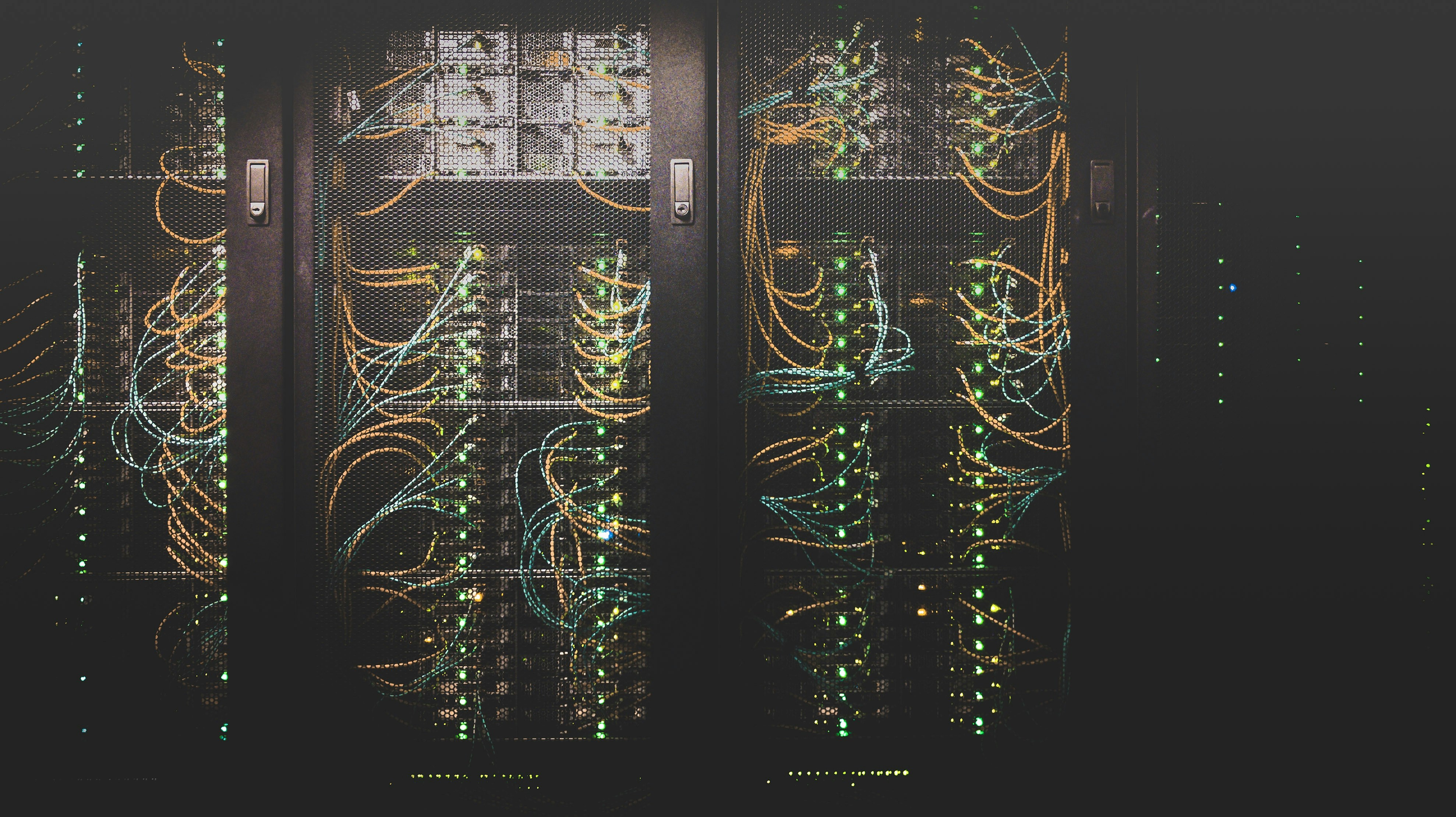
In May 2026, the structural expansion of artificial intelligence has encountered a hard, physical ceiling. According to infrastructure reporting from S&P Global Market Intelligence, projected data center electricity consumption across the United States and Europe is on track to double from 2023 levels, threatening to overwhelm legacy baseload capacity. The primary bottleneck for deploying next-generation frontier models is no longer algorithmic innovation, coding talent, or silicon design. It is raw, verifiable, gigawatt-scale electrical power.
The reality of this physical chokepoint became glaringly obvious during a private infrastructure symposium I attended in Frankfurt last month. Sitting across from a senior grid deployment engineer for a Tier-1 European utility, the mood was remarkably tense. For decades, his mandate was managing predictable, incremental industrial load variations.
Now, he was looking at automated requests from hyperscalers demanding continuous 500-megawatt grid interconnects for single, hyper-dense facilities.
“Elena,” he said, pointing to a severe demand divergence chart on his terminal, “we are watching standard commercial real estate collapse while industrial power access becomes the most valuable commodity in Europe. Tech companies aren’t asking for bandwidth anymore; they are asking for exclusive access to our substations.”
Let me be absolutely clear: if you are still attempting to play the artificial intelligence boom by exclusively purchasing enterprise software equities, you are fighting the last war. Energy infrastructure and the heavily fortified data centers housing advanced liquid-cooled compute clusters have officially become the apex real estate assets of the global economy. The artificial intelligence narrative has fundamentally decoupled from the digital realm and crashed headfirst into the physical world.
The Commoditization of Code
For the past two decades, institutional capital heavily favored software-as-a-service (SaaS) business models. The financial mechanics were incredibly seductive: near-zero marginal costs of reproduction, frictionless global scalability, and massive gross margins averaging 75% to 85%. Software was actively eating the world. However, the aggressive maturation of open-source foundational AI models over the last twenty-four months has systematically commoditized standard code generation.
When any mid-sized enterprise can deploy highly capable, localized language architectures using optimized open-source parameters, standard application software ceases to be a reliable defensive moat. The true competitive premium has shifted away from the application layer and down to the bare metal. More specifically: proprietary ownership of specialized compute clusters and the dedicated electrical grids required to power them. We have officially transitioned from an era of highly intangible software monopolies to an era of physical infrastructure oligarchies.
The Silicon-Energy Nexus
To grasp the sheer scale of this macro rotation, one must examine the baseline hardware footprint. Training an advanced multi-trillion parameter frontier model in 2026 requires uninterrupted access to gigawatt-scale data installations. These facilities bear zero resemblance to the standard air-cooled enterprise server farms of 2015. They are bespoke, liquid-cooled industrial fortresses operating at thermal capacities that consume as much continuous electricity as mid-sized sovereign municipalities.
The Tier-1 hyperscalers — Microsoft, Google, Amazon, and Meta — are locked in an existential compute arms race that has collided violently with the physical limitations of Western electrical distribution grids. According to baseline forecasts mapped out in the comprehensive International Energy Agency (IEA) Electricity Analysis, data centers, AI workloads, and distributed ledger sectors are driving a structural surge in electricity demand that requires immediate, massive capital deployment to avoid systemic brownouts.
This reality has forced legacy tech giants to effectively transform into synthetic utility companies. To verify regional baseline capacities, agencies like the U.S. Energy Information Administration (EIA) have even been forced to initiate specialized field evaluations tracking server metrics and consumption patterns directly at the institutional level. Hyperscalers are systematically bypassing traditional commercial real estate developers to negotiate direct baseline power treaties with sovereign energy providers.
We are observing hyperscalers actively funding the deployment of dedicated Small Modular Reactors (SMRs) — advanced scalable architectures extensively documented by the World Nuclear Association — and acquiring direct stakes in legacy nuclear generation assets. The new operating law governing Silicon Valley is brutal but absolute: If you cannot secure long-term, uncurtailed baseload power, you cannot participate in the global machine intelligence economy.
Key Infrastructure Dynamics for Q2 2026
- The Interconnect Premium: Operational data centers securing long-term Power Purchase Agreements (PPAs) with direct high-voltage grid interconnects are currently commanding valuation premiums exceeding 400% over standard commercial square footage. Unpowered real estate is a liability; grid connectivity is pure alpha.
- The Nuclear Resurgence: Institutional capital allocations are flowing aggressively into physical uranium trusts and Tier-1 enrichment infrastructure, driven entirely by the continuous 24/7 baseload requirements of AI training clusters. Supported by frameworks like the European Commission’s SMR Strategy, industrial policy is officially pivoting back to continuous atomic yield. Intermittent solar and wind deployments are mathematically incapable of sustaining continuous computational workloads.
- Sovereign Compute Classifications: Nation-states are systematically moving to classify hyper-scale compute clusters as critical national security infrastructure, implementing strict regulatory frameworks to block foreign acquisition of domestic data assets and the physical energy rails powering them.
Wall Street’s Great Infrastructure Pivot
The institutional capital response to this physical realignment has been aggressive. Private equity, sovereign wealth, and dedicated infrastructure funds are rapidly rotating capital out of legacy commercial real estate — an asset class remaining structurally impaired by remote work patterns and elevated debt servicing costs — and funneling it directly into digital infrastructure.
However, the capital expenditure (CapEx) barrier to entry has reached historic extremes. Constructing a competitive, state-of-the-art AI training cluster requires billions of dollars in upfront structural deployment before a single training parameter executes. Furthermore, the specialized global supply chain supplying mission-critical components — high-voltage step-down transformers, multiphase liquid cooling manifolds, and high-bandwidth optical interconnects — is experiencing structural delivery backlogs stretching well into 2028.
This supply-side constraint guarantees an exceptionally deep, defensible moat for early movers. The legacy entities that secured physical land rights, dedicated substation access, and advanced silicon allocations throughout 2023 and 2024 now hold an almost insurmountable baseline advantage over late-cycle entrants.
The Geopolitics of Computation
This infrastructure deficit must also be evaluated through a macro-geopolitical lens. Raw computational throughput is rapidly establishing itself as the base currency of international statecraft. Nations possessing structural domestic energy surpluses — spanning specific regions of North America, Scandinavia, and the Middle East — are weaponizing their low-cost, abundant baseload capacity to attract foreign hyperscaler capital. In exchange for granting uncurtailed access to their electrical grids, these host nations are extracting mandatory local tech transfers and priority access to sovereign AI compute clusters.
Conversely, developed economies burdened by aging, highly fragile, and over-regulated electrical distribution networks face severe, systemic capital flight. If a sovereign jurisdiction cannot guarantee stable, gigawatt-scale electrical delivery for new computational infrastructure, it will inevitably lag in the global artificial intelligence transition, suffering long-term structural degradation to its domestic productivity and technological sovereignty.
Strategic Execution for H2 2026
The fundamental truth driving institutional asset allocation in 2026 is that Artificial Intelligence is primarily an energy, materials, and infrastructure phenomenon. Portfolios attempting to capture the AI super-cycle purely through software-layer equity holdings are fundamentally mispricing the value chain.
To navigate the compute deficit successfully, institutional capital must execute along physical chokepoints:
- Target Critical Infrastructure Suppliers: The structural bottleneck lies directly in the physical layer. Capital should focus on essential component manufacturers dominating the production of high-voltage transformers, specialized power delivery silicon, and industrial-grade liquid cooling hardware.
- Anchor in Baseload Energy Rails: The hyperscaler rotation toward nuclear baseload is a permanent structural migration. Sustained exposure to Tier-1 uranium extractors, nuclear fuel cycle providers, and modular reactor engineering firms offers highly asymmetric upside to the computational expansion curve.
- Deploy into Secured Private Assets: For institutional allocators, direct private equity exposure to specialized data center REITs holding legally binding, multi-decade Power Purchase Agreements represents the most defensible, high-yield cash flow asset class available in the modern macro environment.
The era of unconstrained, hyper-scalable software expansion has ended. Welcome to the era of absolute physical constraints.
