In May 2026, the global sovereign bond market is experiencing a historic structural drain. According to institutional flow data tracking Tier-1 asset managers, the classic 60/40 portfolio allocation has reached a definitive mathematical breaking point. With US Core Inflation printing persistently above central bank targets and global debt servicing costs escalating, institutional capital is systematically rotating out of government paper. The legacy safe haven has cracked, forcing smart capital to seek refuge outside the traditional fiat perimeter.
The reality of this shift hit home last Tuesday inside a mahogany-paneled boardroom in midtown Manhattan. Acting as an informal consultant for a legacy wealth manager overseeing $4 billion in family office capital, I watched a veteran investor look completely defeated. For his entire thirty-year career, his job was incredibly simple: put 60% of his clients’ wealth into blue-chip equities and 40% into US Treasuries, rebalance quarterly, and go play golf.
But on this particular morning, the math had violently broken.
Inflation was printing at a sticky 6.2%, while his “safe haven” 10-year government bonds were yielding just 4.1%. He was locking in a guaranteed, mathematically certain loss of purchasing power for the wealthiest families in New York. “Elena,” he asked me, rubbing his temples, “if sovereign debt is toxic, where the hell do I park a billion dollars to keep it safe?”
My answer terrified him: “You don’t buy debt anymore. You buy raw compute power, you buy tokenized physical infrastructure, and you buy absolute cryptographic scarcity.”
What we experienced in that boardroom is the harsh, unspoken reality of global finance today. The traditional macroeconomic playbook that legacy economists rely upon is effectively dead. It has been quietly replaced by a brutal, hyper-efficient new paradigm. We are in the middle of the Great Liquidity Reset, and the vast majority of retail investors have absolutely no idea that the foundation of their retirement accounts is actively evaporating.
The Sovereign Debt Wall and the Fiat Breaking Point
Let’s be brutally honest about what is happening with central banks right now. They are no longer independent macroeconomic stewards; they are trapped debt-servicers for over-leveraged governments. With total US public debt explicitly documented by the U.S. Treasury Fiscal Data metrics scaling past sustainable thresholds and the global debt-to-GDP ratio across the G7 hitting historic apexes, trying to pay this back through organic economic growth is a mathematical fantasy.
For decades, we were taught that government bonds were the “Risk-Free Rate.” Today, they are widely and accurately recognized by sophisticated players as Return-Free Risk. When you have inflation remaining stubbornly high and your foundational safe asset yields less than the rate of currency debasement, you are actively burning capital.
This stark realization has triggered an unprecedented event: the Capital Flight to Veracity.
We are tracking a systematic, relentless migration of trillions of dollars moving away from assets that can be arbitrarily debased by a central bank ledger, and into assets governed by strict, immutable mathematics. The extreme volatility we are currently witnessing in the bond markets is not a temporary glitch; it is the market finally pricing in the endgame of the fiat currency experiment. When the foundational “safe” tier of an institutional portfolio drops in real, inflation-adjusted terms, the entire architecture of modern finance requires an immediate settlement reset.
Compute as the New ‘Digital Gold’
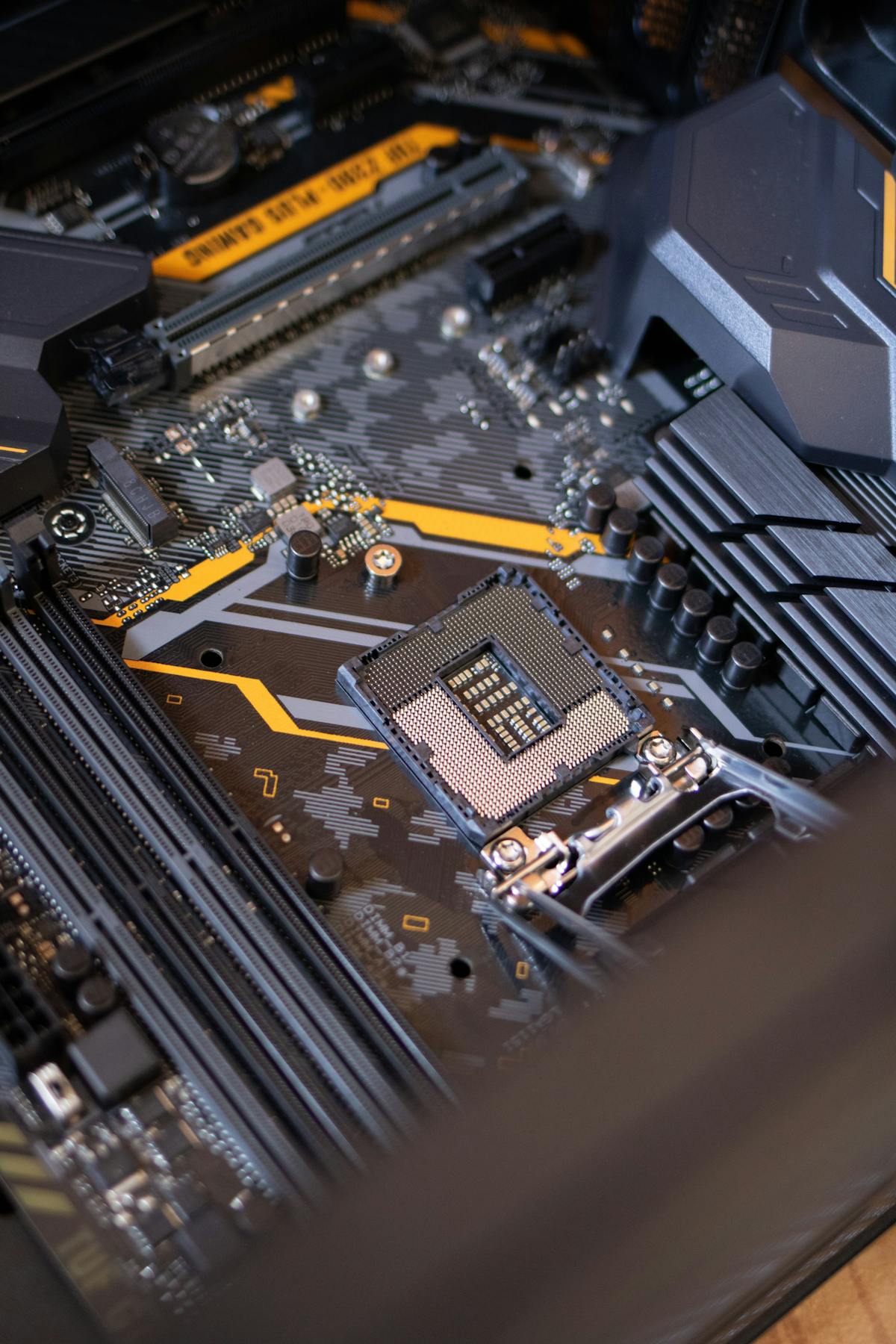
In this turbulent, post-fiat environment, the institutional market has frantically begun searching for a new, unmanipulable anchor of value. In mid-2026, that anchor is indisputably Compute Power.
The exponential explosion of autonomous AI agents — entities we actively track on the trading floor as the Silicon Whales — has turned raw graphical processing power (GPUs) and specialized tensor cores into the most valuable macro-commodity in human history. Supported by continuous infrastructure deployment tracking from platforms like S&P Global Market Intelligence, we are no longer analyzing Artificial Intelligence merely as a software trend; we are analyzing it as a fundamental Macro-Settlement Layer.
Access to highly advanced compute clusters and the green energy grids required to power them is currently being priced with the exact same geopolitical intensity and strategic urgency as crude oil was during the energy crises of the 1970s. We are witnessing the rapid establishment of the Compute-backed Liquidity standard.
Massive data center conglomerates and decentralized compute networks have evolved beyond simple tech infrastructure providers. They are now acting as the new Reserve Entities, issuing corporate debt backed not by projected fiat cash flows, but by their verifiable Hash-power Capacity and proprietary Energy Capture Systems.
Decentralized Physical Infrastructure Networks (DePIN) have become the primary economic rails for this paradigm. By allowing investors to own fractionalized shares of the physical nodes powering the global AI infrastructure, the market has commoditized decentralized intelligence. Access to low-latency compute bandwidth possesses a built-in, physical scarcity that no central government or legislative body can artificially dilute.
The $100 Trillion Migration via RWA Tokenization
If you want to know why the broader equity market hasn’t completely collapsed under the weight of the sovereign debt crisis, look at the deflationary offset provided by institutional efficiency: specifically, the maturity of Real-World Asset (RWA) Tokenization.
The friction-heavy boundary separating legacy Wall Street infrastructure from on-chain finance has been permanently dismantled. Spearheaded by institutional asset managers implementing tokenized fund structures and heavily analyzed in global frameworks like the Financial Stability Board (FSB) Tokenisation Report, legacy banking has actively transitioned into a seamless distributed ledger settlement layer.
For those familiar with the historical friction of back-office reconciliations and delayed wire transfers, the current standard operates with absolute mathematical finality:
- True Atomic Settlement: Delivery vs. Payment (DvP) now occurs in milliseconds. The conceptual operational leaps outlined by the Bank for International Settlements (BIS) Unified Ledger architectures have made the archaic “T+2” settlement timeline obsolete, instantly freeing up trillions in trapped capital that historically sat idle in clearinghouse limbo generating zero yield.
- The Fractionalization of Everything: A sovereign wealth fund in Dubai or a pension fund in London can dynamically hedge its portfolio by instantly purchasing legally binding, tokenized stakes in industrial infrastructure — from copper mines in Chile to agricultural logistics centers in Brazil — directly from their digital vaults.
- Transparent Collateralization: In the modern institutional landscape, “hidden leverage” has been eradicated. Synthetic derivatives and credit issuances are backed by verifiable, real-time on-chain proof-of-reserves. If collateral values breach their thresholds, smart contracts execute liquidations automatically. No bailouts. No backroom deals. The code simply clears.
The 2026 Stablecoin Act and the End of Shadow Banking
We also have to address the regulatory environment. The formal integration of the Stablecoin Clarity and Innovation Act in the United States, running parallel to comprehensive digital asset frameworks globally, officially ended the “Crypto Wild West” narrative.
The digital fiat facilitating this multi-trillion-dollar daily economy is no longer issued by opaque offshore entities. Today, Programmable Money is issued directly by Globally Systemically Important Banks (G-SIBs) and strictly regulated consortiums. These digital assets are fully backed by highly liquid, short-term Treasuries and overnight reverse repo agreements, featuring mandatory cryptographic audits broadcasted to public ledgers 24/7.
By legalizing and integrating smart contract logic into commercial banking plumbing, global regulators have adapted fiat for the digital age. Complex multinational payrolls, cross-border supply chain settlements, and automated escrow logic execute at the base protocol level for fractions of a cent, transforming the decentralized ecosystem into the undisputed primary settlement rail for global commerce.
Bitcoin: The Apex Predator of the Supercycle
While the broader market tokenizes physical real estate and corporate debt, Bitcoin has quietly and permanently solidified its position as the undisputed Apex Reserve Asset of the 21st century.
Beyond arbitrary price targets, the underlying structural reality is driven by an inevitable institutional demand shock colliding with a mathematically inelastic supply curve. With the globally distributed Lightning Network effortlessly clearing millions of instant, low-fee transactions globally, Bitcoin has successfully transitioned from a passive store of value into a high-velocity base layer of digital energy.
The geopolitical shift surrounding this asset is profound. Sovereign nations in the Global South, historically marginalized by Western banking monopolies, are no longer waiting for foreign aid or predatory loans to build their infrastructure. By strategically capturing Stranded Energy from remote volcanic, geothermal, and hydroelectric sources to mine Bitcoin, these nations are aggressively generating pristine, non-sovereign hard currency.
This Energy-to-Alpha pipeline is permanently decoupling emerging economies from legacy fiat dependency. Holding Bitcoin on a corporate or sovereign balance sheet is no longer considered speculation; it is widely recognized as the only viable, mathematically sound macro hedge against the ongoing monetization of sovereign debt. If governments must print fiat to survive their debt loads, the rational actor must hold the only asset they absolutely cannot print.
The Post-Quantum Security Paradigm
A lingering question among legacy fund managers remains: what about quantum computing threats? While the stabilization of multi-thousand-qubit processors posed a theoretical risk to legacy encryption, the decentralized economy executed a proactive defense. The industry-wide operational transition adhering to the finalized NIST Post-Quantum Cryptography Standards represents the most massive, coordinated security upgrade in computer science history, operating flawlessly across base layers.
The fragile concept of a plain-text seed phrase written on paper has evolved. Today, institutional custodians secure massive capital allocations utilizing Zero-Trust Biometric Multi-Party Computation (MPC). Capital is locked behind threshold signatures mathematically impervious to quantum decryption. Distributed cryptographic shards, verified via biometric keys, form a decentralized vault architecture that cannot be brute-forced.
This flawless post-quantum migration proved that open-source, decentralized coordination responds to existential technological threats significantly faster and more efficiently than the siloed bureaucracies of legacy infrastructure.
The Strategic Playbook for H2 2026
The global markets of 2026 do not forgive the slow, the hesitant, or the purely nostalgic. Navigating this deeply complex macroeconomic environment requires abandoning legacy financial dogma entirely.
To survive the Great Liquidity Reset, institutional and sophisticated capital must execute with architectural precision:
- Abandon Legacy Paper: Aggressively liquidate long-term sovereign debt exposure. The purchasing power of fiat will continue to erode as central banks prioritize fiscal debt servicing over currency strength. Do not provide exit liquidity for government mismanagement.
- Anchor in Absolute Scarcity: Maximize portfolio exposure to the core pillars of unbannable value: Bitcoin for mathematically guaranteed digital scarcity, tokenized physical commodities for hyper-liquid baseline stability, and AI-compute infrastructure for highly productive technological scarcity.
- Capture Institutional DePIN Yields: Cease holding idle capital in legacy bank accounts yielding negative real returns. Deploy stablecoin liquidity into highly regulated, over-collateralized decentralized credit markets offering premium organic yields generated by real-world productive output.
- Deploy Algorithmic Hedging: Utilize autonomous AI agent networks for dynamic risk management. In a hyper-efficient market dominated by automated execution, relying strictly on human reaction times for cross-chain arbitrage or volatility mitigation is a sharp operational liability.
The Great Liquidity Reset is not a theoretical event on the horizon; it is actively executing right now, block by block, transaction by transaction. You can either measure your wealth in depreciating paper promises, or you can anchor your capital in the verifiable reality of the Compute-Scarcity Standard.
