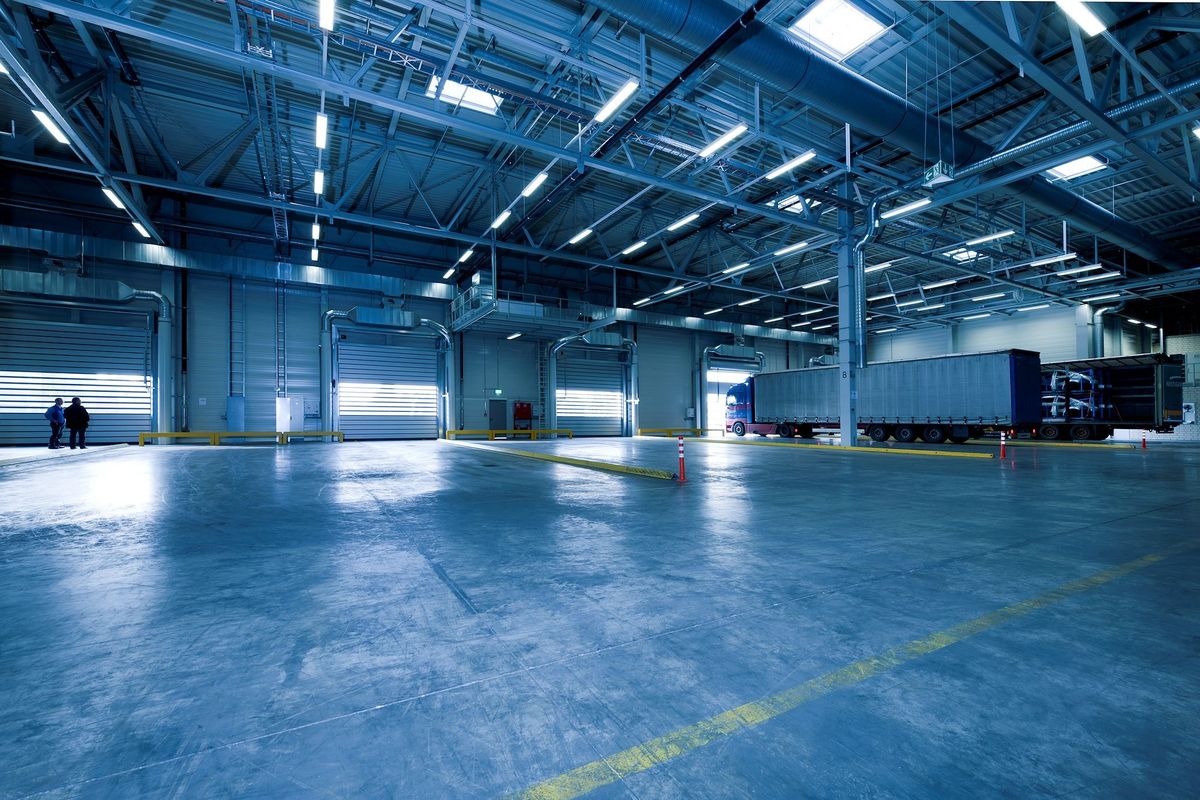
Last Tuesday, I drove out to a nondescript industrial park just outside of Phoenix. From the highway, it looked like a standard logistics hub—boring, flat, and grey. But walking up to the perimeter fence, you couldn’t hear the usual sounds of delivery trucks. Instead, there was a persistent, low-frequency hum vibrating through the pavement. It sounded like a massive jet engine that refused to take off.
That hum is the sound of a next-generation AI data center attempting to cool itself down. And standing outside that fence, I realized that the entire retail investing world is looking at the Artificial Intelligence boom completely backward.
For the last three years, everyone and their mother has been desperately chasing software stocks. We’ve seen retail investors blindly throwing capital at any tech company that slaps the letters “LLM” or “Generative” onto its quarterly earnings report. The obsession has been entirely focused on the digital layer: the algorithms, the code, the user interfaces.
But here is the dirty little secret of the 2026 market that Wall Street isn’t talking about on morning television: Artificial Intelligence is not a software industry. It is a heavy industry.
You cannot run a multi-trillion parameter neural network on good intentions and cloud storage. It requires physical reality. It requires land, massive cooling towers, millions of gallons of water, and above all else, an absolute, ungodly amount of electricity.
Let’s look at the raw numbers, because the math is starting to break the grid. A standard Google search requires roughly 0.3 watt-hours of electricity. A single query to a modern, multi-modal AI agent in 2026? That pulls closer to 15 watt-hours. Now multiply that by billions of daily users, autonomous agents talking to other agents, and enterprise-level financial forecasting. The power draw isn’t just scaling linearly; it is going exponential.
This brings us to the most obvious, yet heavily ignored, value investing play of the decade. The smart money isn’t buying software startups anymore. They are buying the bottleneck.
If you track the quiet acquisitions made by massive private equity firms over the last six months, you won’t see them buying Silicon Valley code. You will see them buying utility companies in the Midwest, securing rights to small modular nuclear reactors (SMRs), and aggressively hoarding physical commodities.
Copper is the perfect example. You literally cannot build a high-voltage data center without miles of copper wiring. We are currently facing a structural, global copper deficit. Existing mines in South America are aging, grades are declining, and opening a new mine takes anywhere from ten to fifteen years due to environmental regulations. You don’t need a PhD in economics to understand what happens when unstoppable AI demand meets a physically immovable supply of industrial metals.
The same applies to the energy grid infrastructure. Legacy power grids in the United States and Europe were built for the 1970s. They are physically incapable of handling the localized power spikes required by these new mega-facilities. This is why we are seeing a massive resurgence in nuclear energy investments. Companies that specialize in grid modernization, high-voltage transformers, and uranium mining are printing cash while flying completely under the retail radar.
I spoke with a hedge fund manager last week who put it beautifully: “During the Gold Rush, the guys digging for gold usually went broke. The guys selling the shovels got rich. But today, everyone is trying to sell digital shovels. I’m buying the company that makes the steel for the shovel.”
If your portfolio is heavily overweight on tech stocks with triple-digit P/E ratios, you are taking on massive risk. The real alpha in 2026 isn’t found in the cloud. It’s found in the dirt, the wires, and the concrete that keeps the cloud from overheating. The transition from software speculation to physical infrastructure is happening right now, and the window to position yourself ahead of this massive capital rotation is closing fast.
